Home › Concrete Foundations and Footings
Ensure your structure is built on solid ground with concrete foundations in Baton Rouge, LA. We pour foundations and footings for new homes, additions, and garages with proper depth, reinforcement, and drainage. Our crew coordinates with your builder to deliver straight, square, and level foundation work.
Baton Rouge Concreters provides professional concrete foundations throughout Baton Rouge, LA, Louisiana and the surrounding area. Our licensed, insured crew delivers safe, clean, on-time work with a free estimate before anything begins. Call (225) 529-9098 or request your free quote.
Concrete foundations in Baton Rouge built for our soil and our weather
In Baton Rouge, concrete foundations are only as good as the soil and drainage they sit on. At Baton Rouge Concreters, we start every foundation job with a site visit, not a guess. We look at how your lot drains after a rain, what kind of fill is on-site, and whether we are dealing with native clay, river silt, or a mix. This is what decides footing depth, slab thickness, and whether we recommend a thickened edge slab, continuous stem-wall footing, or a pier-and-beam style system.
We design concrete foundations around local conditions. Our heavy clay swells when it is wet and shrinks when it is dry. If a contractor ignores that, you get cracks, sticking doors, and sloping floors within a few seasons. We size and reinforce footings to manage that movement, and we match the foundation type to the structure, whether it is a small backyard workshop, a new home addition, or a light commercial build.
Every proposal from Baton Rouge Concreters spells out the foundation type, footing dimensions, rebar layout, and concrete strength we plan to use. You see exactly what you are paying for so you can compare it to other bids in a fair, detail by detail way, not just price versus price.
How we install concrete foundations and footings step by step
Once you approve the plan, we follow a consistent process so there are no surprises.
1) Layout and elevation checks: We set batter boards and string lines to mark the footprint of the foundation and footing locations. We shoot elevations with a laser level to confirm finished floor height, and we double check against floodplain requirements for your part of Baton Rouge.
2) Excavation and subgrade prep: We dig footings to the specified depth and width, typically down to stable soil and below the local frost line, then widen and deepen as needed in softer areas. We remove organic topsoil and soft pockets under slab areas, then compact the subgrade with a plate compactor or roller. Where drainage is a concern, we add a layer of compacted crushed stone to help with moisture control.
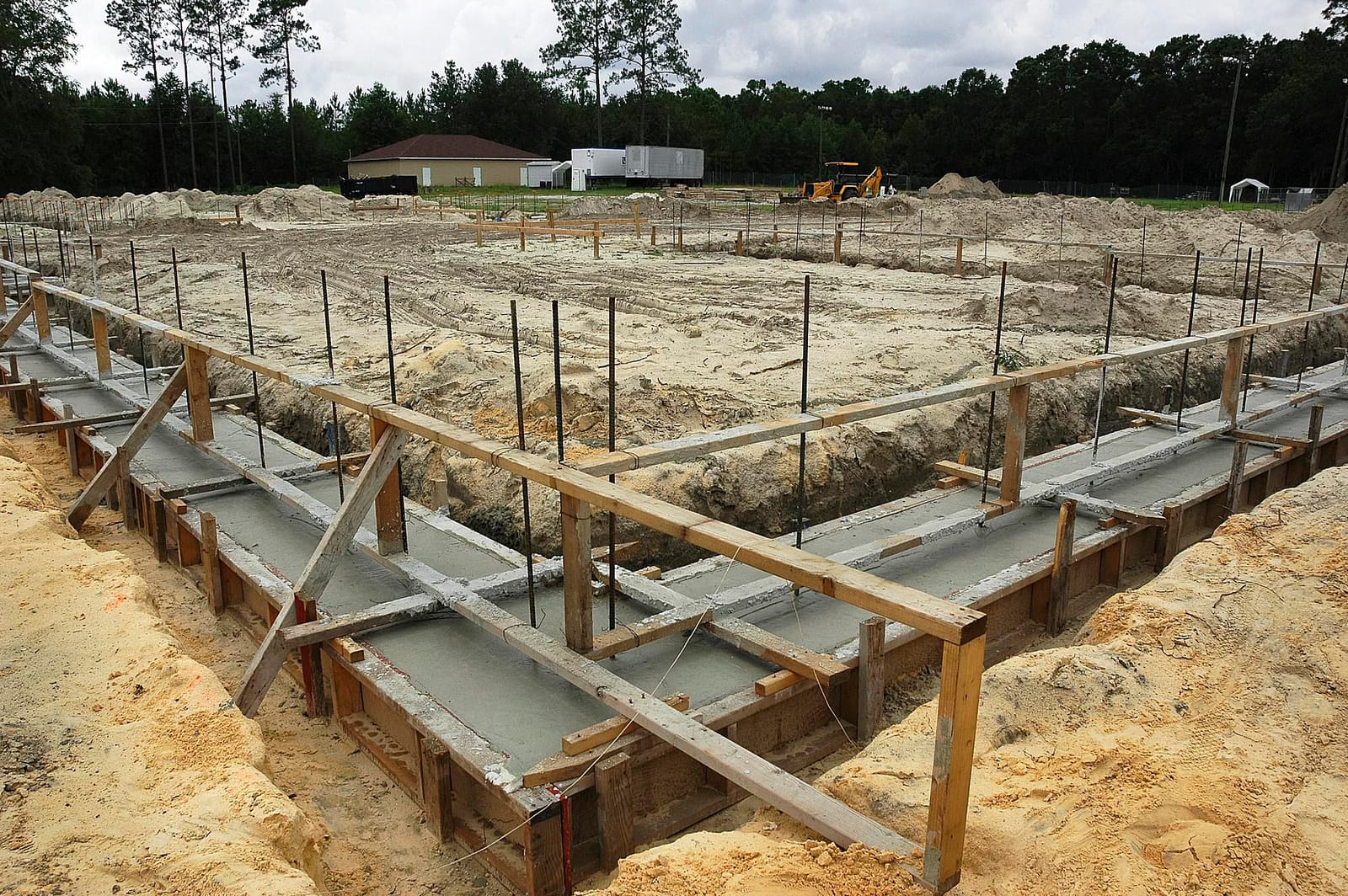
3) Forms and reinforcement: We build sturdy wood or metal forms so the foundation holds its shape and dimensions during the pour. Inside, we install rebar grids, footing cages, and any vertical dowels that tie into stem walls or piers. Rebar size and spacing depend on span, loads, and soil conditions, but we always install chairs or supports so steel is lifted into the proper position, not lying on the dirt.
4) Utilities and penetrations: Before we pour, we coordinate with you or your plumber and electrician. Sleeves for water, sewer, and conduit are set in place, so we do not have to cut the slab later. For garages or workshops, we can form trenches for drains or thicker equipment pads as part of the same pour.
5) Concrete placement and finishing: We order the right mix design for the job and weather on the day of the pour. Our crew places concrete evenly, keeps rebar fully covered, and uses vibrators where needed to eliminate voids in footings and walls. For slabs, we strike off, bull float, and either broom finish or steel trowel finish depending on how the surface will be used.
6) Curing and quality checks: Proper curing matters more than most people realize. We use curing compounds, coverings, or light water misting depending on temperatures and sun exposure. Before we strip forms, we check footing sizes, anchor bolt locations, and surface flatness so your framing or block crew can start without delays.
Foundation options we offer and where each one makes sense
Baton Rouge does not have a one size fits all foundation. At Baton Rouge Concreters, we help you match the foundation style to your building, soil, and budget.
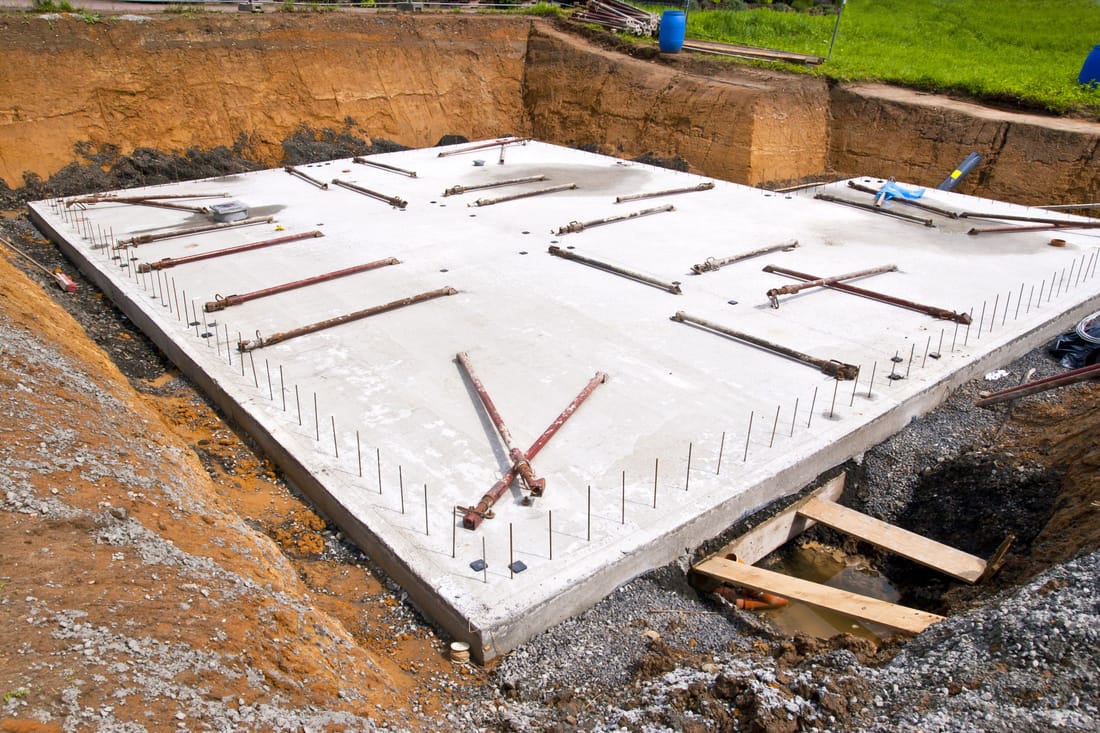
Monolithic slab with thickened edge: This is common for garages, shops, and many homes on stable fill. The slab and footing are poured in one piece. The perimeter is thickened and more heavily reinforced, and interior load-bearing walls can have turned down beams. This option usually offers the best value when soil has been properly compacted and drainage is handled well.
Stem wall footing with separate slab: Here, we pour continuous footings and low concrete or block walls first, then pour the slab inside later. This is useful when you need the finished floor higher than the surrounding grade or when you want more control over insulation or vapor barriers under the slab.
Pier and beam style concrete footings: For additions on existing raised homes or in areas with more variable soil, we may recommend isolated concrete piers with grade beams. This lifts the structure above grade and allows crawlspace access. We still install high quality concrete footings and beams, but the finished structure behaves differently than a slab-on-grade.
Specialty options: For equipment pads, heavy safes, or generator foundations, we can design thickened slabs with additional reinforcement and embedded hardware. For clients planning polished concrete or epoxy floors, we pour flatter slabs with tighter finishing tolerances from the start, which saves money on grinding later.
Weather, timing, and seasonal issues for Baton Rouge foundations
The Gulf Coast climate affects how and when we pour concrete foundations. Baton Rouge has hot, humid summers, frequent thunderstorms, and occasional cold snaps. Baton Rouge Concreters schedules and manages pours so the concrete actually gains strength as it should.
In summer, rapid moisture loss can cause surface cracking and weak top layers if you do not control it. We adjust set times with admixtures when needed, schedule early morning pours, and use curing methods that keep moisture in the slab. For larger foundations, we plan logistics so trucks arrive in sequence, which prevents cold joints and ensures consistent finishing.
In the rainy seasons, drainage and site access matter. We try to excavate and form when the forecast gives us a clear enough window to pour and start initial curing without the excavation filling with water. On low-lying lots, we may recommend temporary swales or pumps while work is underway. This planning helps avoid undermined footings and washouts.
Winter in Baton Rouge is usually mild, but we still pay attention to cold nights. Concrete that drops below recommended curing temperatures can have its early strength reduced. When necessary, we adjust mix designs, use insulating blankets, and time the pour so the first critical curing hours occur during the warmest part of the day.
If you are trying to time a new build or addition, late fall and late spring are often the most predictable periods for foundation work locally. We can still pour at other times, we simply adjust our approach to match the weather and protect your investment.
What drives the cost of concrete foundations in Baton Rouge
Foundation pricing is not just square footage. Several specific factors affect what you pay and what you get.
Soil and site conditions: Soft, wet, or poorly compacted soil means deeper or wider footings and more prep time. A clean, well-draining pad on stable fill costs less to build on than a lot that needs undercutting and replacement fill. Limited access for trucks or equipment can also add time and cost.
Foundation type and loads: A simple monolithic slab for a light structure is less complex than a foundation with multiple thickened interior beams, stem walls, or heavy point loads. If you are building a structure that will hold vehicles, lifts, or machinery, we will beef up the design accordingly, and you will see that in both material and labor costs.
Rebar and concrete specs: Higher strength concrete mixes, more rebar, closer spacing, and additional beams increase cost but also increase performance. Baton Rouge Concreters is clear in our bids about rebar size (for example, #4 versus #5), spacing, and concrete PSI, so you can see how one quote really compares to another.
Finishing requirements and details: A broom-finish slab for a utility building costs less than a slab that must meet tight flatness tolerances for interior floors. Adding thickened pads, block-outs, anchor layout for steel columns, or formed steps adds detail work that affects price.
We are always willing to walk through the estimate line by line so you understand which parts of the foundation are essential and where there might be options to adjust based on long-term plans and budget.
How Baton Rouge Concreters prevents common foundation problems
Most foundation problems people see later, such as cracks, settling, or slab moisture issues, start with shortcuts on day one. Our approach is to remove those shortcuts.
Settlement and cracking: We focus on subgrade and drainage first because concrete only performs as well as what is below and around it. We compact properly, avoid pouring on mud or soft fill, and size footings to match the loads. Control joints are laid out intentionally so expected shrinkage cracks happen along straight, planned lines instead of randomly through the slab.
Water and moisture: Baton Rouge gets heavy rain. We slope the grade around the foundation away from the structure, recommend gutters where appropriate, and install vapor barriers under interior slabs. For slabs that will receive flooring, like hardwood or vinyl, we pay close attention to this step to reduce future moisture problems.
Reinforcement and connections: We never rely on wire mesh tossed into concrete as the only reinforcement. Properly placed rebar and correct embedment of anchor bolts into the concrete help the foundation and structure act together when the soil moves. This is especially important in our clay soils.
Communication with other trades: Many foundation issues come from poor coordination. We talk with your builder, framer, or steel contractor early about bolt patterns, column locations, and openings. This avoids last minute slab cutting or drilling that can weaken the foundation.
If you are planning concrete foundations for a new build or addition in Baton Rouge, Baton Rouge Concreters can review your plans, visit your site, and give you a realistic design and quote that fits our local conditions instead of an out of town template.